English to Arabic Certified Translation
In today’s interconnected world, the need for precise communication between English and Arabic has never been greater. Whether you are applying for a Saudi work visa, submitting legal contracts to a Saudi court, or preparing academic certificates for recognition in the UAE or Qatar, one thing is certain: you need an English to Arabic certified translation.
At Rwaaq Al-Marifaa, we help individuals and businesses across Saudi Arabia and beyond get their documents translated accurately, quickly, and in full compliance with government requirements. But what exactly makes a translation “certified”? And why can’t you just rely on Google Translate for important documents? This guide answers all your questions in simple, easy-to-read language.
What is a Certified Translation?
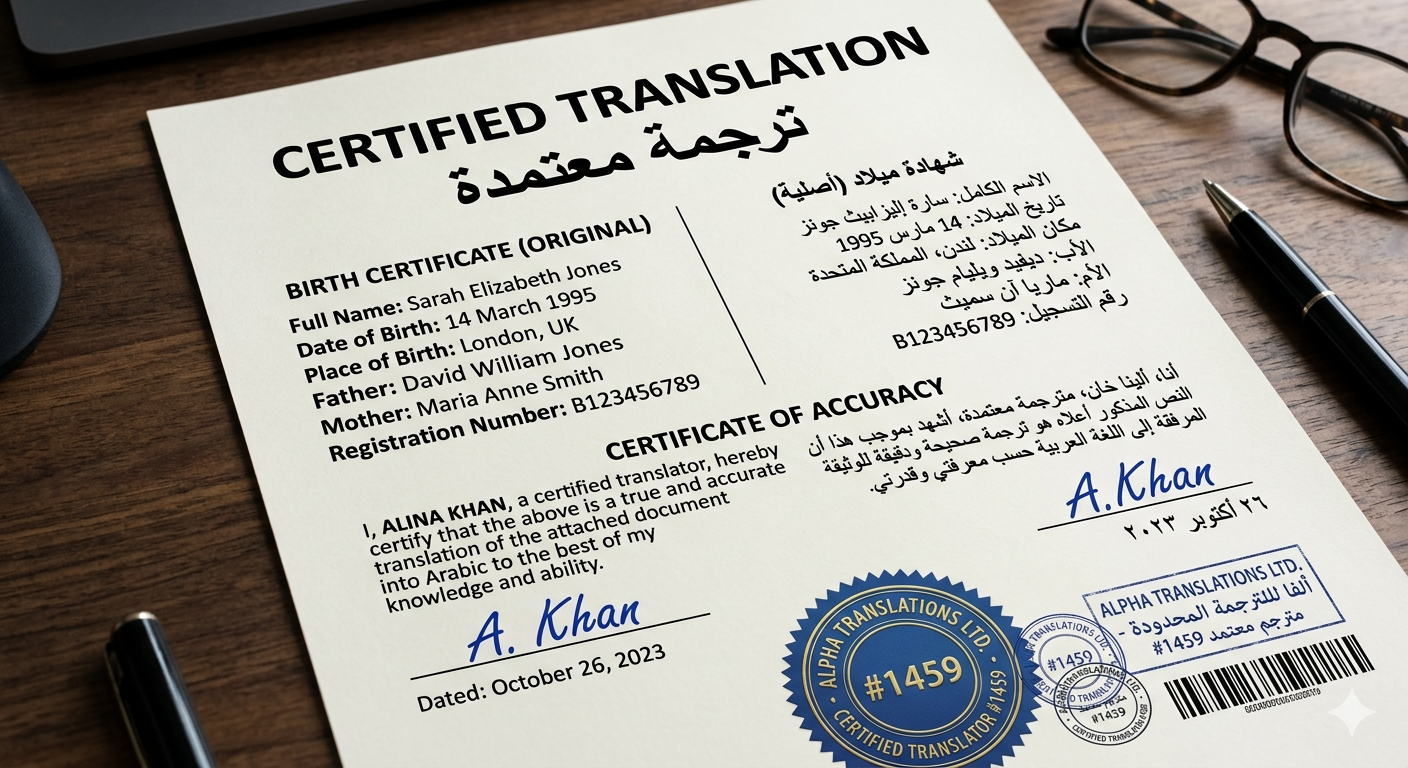
A certified translation is a written translation of a document that comes with a signed statement from the translation agency or translator. This statement attests that the translation is accurate and complete to the best of their knowledge.
Important: Certified translation is not the same as notarization or apostille. Certification focuses purely on the accuracy of the language conversion.
Why You Need English to Arabic Certified Translation
-
Government & Visa Requirements: Saudi embassies, the Ministry of Foreign Affairs, and immigration offices almost always require certified Arabic translations of English documents (e.g., birth certificates, marriage licenses, police clearance).
-
Legal Compliance: For business contracts, litigation, or property deals in Arabic-speaking countries, courts will reject non-certified translations.
-
Academic Enrollment: Universities in KSA, UAE, or Egypt require certified translations of diplomas and transcripts.
-
Medical & Official Records: Hospitals and government health agencies accept only certified translations of medical reports.
The Risks of Non-Certified or Machine Translation
Using Google Translate or an uncertified freelancer for official documents can lead to:
-
Visa Rejection: Even a small mistranslation of a name or date can get your application denied.
-
Legal Delays: Courts will not accept machine-translated contracts. You will lose time and money.
-
Loss of Trust: Incorrect translations of business documents can harm your professional reputation.
What to Expect from a Professional Certified Translation Service (Like Rwaaq Al-Marifaa)
When you choose a trusted agency, here is the process:
-
You Submit: Send a clear scan or photo of your English document.
-
Review & Quote: The team reviews for complexity and provides a fixed price and deadline.
-
Human Translation: A qualified, native-level Arabic translator works on your document. No software-only translation.
-
Quality Check: A second editor compares the original and the Arabic version.
-
Certification: You receive the translated document + a signed certificate of accuracy.
-
Delivery: Ready for submission to any embassy, court, or authority.
Documents Most Commonly Translated (English → Arabic)
-
Personal: Birth/death certificates, marriage/divorce decrees, passports
-
Legal: Power of attorney, contracts, court rulings, affidavits
-
Corporate: Articles of incorporation, financial statements, meeting minutes
-
Academic: Degrees, diplomas, transcripts, recommendation letters
-
Medical: Vaccination records, diagnosis reports, lab results
How to Choose the Right Translation Partner in Saudi Arabia
Look for these four qualities:
-
Accreditation: A legally accredited agency (like Rwaaq Al-Marifaa) follows official regulations.
-
Confidentiality: Your personal data and documents must be handled securely.
-
Experience: Proven track record with Saudi embassies, MOFA, and visa departments.
-
Turnaround Time: Fast, reliable service for urgent travel or legal deadlines.
Pro Tip: Always ask for a soft copy (PDF) of both the translation and the certification letter. Most authorities accept digital copies submitted online.
Final Words: Don’t Gamble with Official Documents
Your visa, legal case, or university admission depends on accurate, accepted translations. While machine translation is fine for understanding a menu, it is never acceptable for official use. Invest in a certified, professional translation from a trusted agency like Rwaaq Al-Marifaa.